

 English
 中文简体
中文简体Aluminum Windows: The Ultimate Guide to Alloy and Hurricane-Resistant Options
Introduction Aluminum windows have become one of the most popular choices in modern construction, offering a balance of strength, style, and practical...
Read MoreContent
The most fundamental difference between thermal break casement windows and standard aluminum casement windows lies in the frame structure. Standard aluminum windows use a single continuous aluminum profile, which allows heat to transfer easily between indoor and outdoor environments. Aluminum’s high thermal conductivity makes this structure simple but thermally inefficient.
Thermal break casement windows incorporate an insulating barrier, usually a polyamide strip, between the interior and exterior aluminum sections. This thermal break interrupts heat flow through the frame, significantly reducing thermal bridging. As a result, the window frame itself becomes an active component of the building’s insulation system.
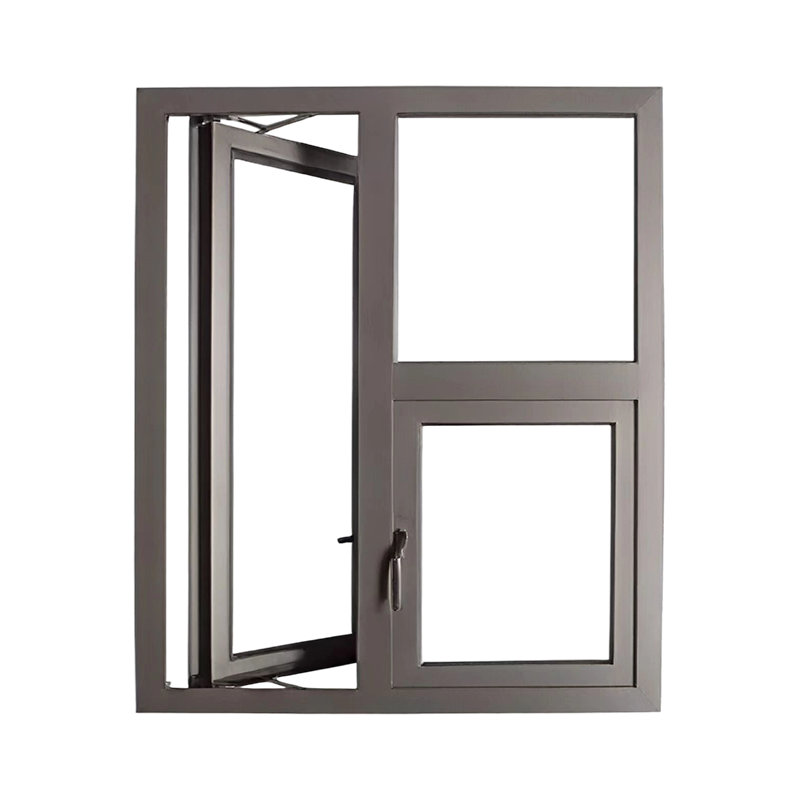
Thermal performance is a key consideration when comparing these two window types. Standard aluminum casement windows tend to allow noticeable heat gain in summer and heat loss in winter, which can increase indoor temperature fluctuations and energy consumption. This limitation is especially evident in regions with extreme seasonal temperature differences.
Thermal break casement windows are designed to address this issue by reducing heat transfer through the frame. The insulating barrier improves overall U-value performance, helping maintain stable indoor temperatures. This contributes to lower heating and cooling demand and supports energy-efficient building strategies.
Condensation is a common issue with standard aluminum casement windows, particularly in cold or humid environments. Because the aluminum frame easily transfers cold from outside to inside, moisture in indoor air can condense on the frame surface, leading to water droplets and potential damage to surrounding finishes.
Thermal break casement windows maintain a higher interior frame temperature due to reduced heat transfer. This significantly lowers the risk of condensation forming on the frame, improving indoor comfort and helping protect interior walls, window sills, and finishes from moisture-related issues.
Both thermal break and standard aluminum casement windows can achieve good weather resistance when properly designed. However, thermal break systems often feature more advanced profile designs that allow for multiple sealing points and improved gasket integration.
Enhanced sealing contributes to better resistance against air infiltration, wind pressure, and rain penetration. This makes thermal break casement windows more suitable for applications where airtightness and long-term performance under varying weather conditions are required.
While glass selection plays a major role in sound insulation, frame design also affects acoustic performance. Standard aluminum casement windows may transmit vibration more easily due to the continuous metal structure, which can reduce overall sound insulation effectiveness.
Thermal break casement windows benefit from the insulating barrier within the frame, which helps dampen vibration transfer. This structural separation can enhance sound insulation performance, making thermal break systems more suitable for residential buildings in noisy urban environments.
Standard aluminum casement windows are valued for their strength, corrosion resistance, and low maintenance requirements. In mild climates or non-conditioned spaces, they can provide reliable long-term performance with minimal complexity.
Thermal break casement windows maintain these durability advantages while adding improved thermal and comfort performance. Modern thermal break materials are engineered for long-term stability, ensuring the insulating barrier remains effective throughout the window’s service life.
Choosing between thermal break and standard aluminum casement windows depends largely on building requirements and environmental conditions. Standard aluminum casement windows may be suitable for warehouses, balconies, or non-heated spaces where thermal performance is not a priority.
Thermal break casement windows are better suited for residential buildings, offices, hotels, and energy-conscious projects where indoor comfort, condensation control, and energy efficiency are critical. Understanding these practical differences helps architects and builders select the most appropriate window system for each application.
| Comparison aspect | Standard aluminum casement windows | Thermal break casement windows |
| Frame structure | Single aluminum profile | Aluminum with insulating barrier |
| Thermal performance | Lower insulation | Improved insulation |
| Condensation risk | Higher | Lower |


