English
 中文简体
中文简体Aluminum Windows: The Ultimate Guide to Alloy and Hurricane-Resistant Options
Introduction Aluminum windows have become one of the most popular choices in modern construction, offering a balance of strength, style, and practical...
Read MoreCurtain wall systems have become a defining feature of modern commercial and institutional architecture. Whether you are an architect specifying a facade for a high-rise tower, a developer evaluating costs, or a contractor comparing installation methods, understanding the different curtain wall types and what drives curtain wall cost per sqft is essential to making the right decisions. This guide covers the major system categories, their performance characteristics, and a practical breakdown of cost factors.
Content
A curtain wall system is a non-load-bearing exterior facade attached to a building's primary structural frame. It carries only its own weight and transfers wind and seismic loads to the main structure through anchors and connections. Unlike conventional masonry or infill walls, curtain walls are typically composed of aluminum framing, glass infill panels, and a range of opaque cladding materials such as aluminum composite panels or honeycomb panels. The result is a lightweight, high-performance building envelope that simultaneously manages weather, thermal performance, acoustics, and aesthetics.
Modern curtain wall systems are engineered to meet increasingly demanding standards for energy efficiency, structural resilience, and occupant comfort. Selecting the right curtain wall system requires balancing initial cost, long-term operating savings, installation complexity, and the specific functional requirements of the project.
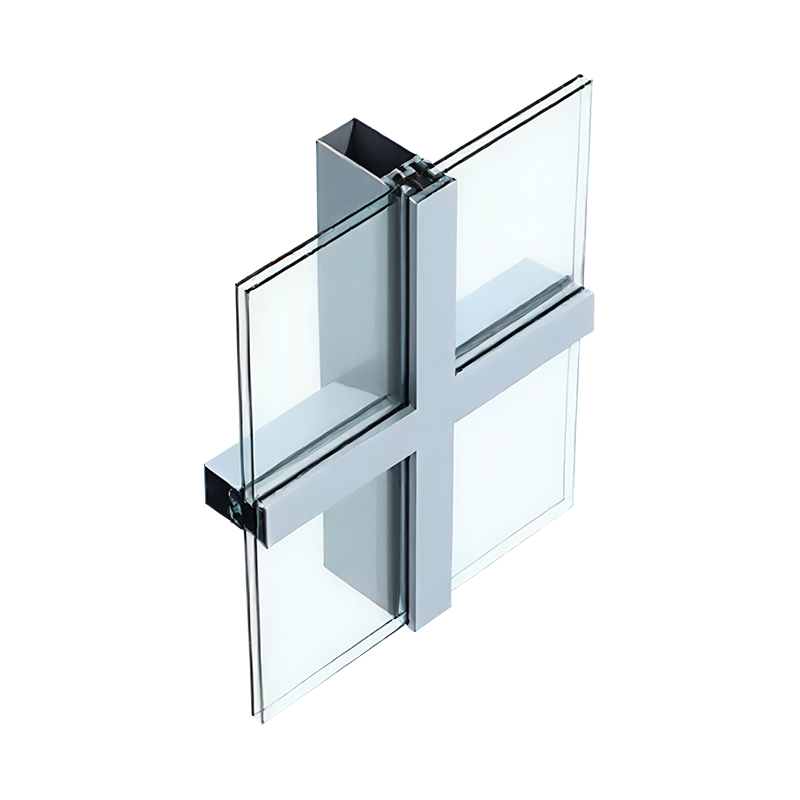
The stick curtain wall system is assembled piece by piece on-site, with vertical mullions and horizontal transoms installed individually before glass or panel infill is fitted. High-span support stick curtain walls are specifically engineered to accommodate large openings with structural stability, making them well suited for low- to mid-rise facades, retail frontages, airport terminals, and cultural buildings where design flexibility and large-format glazing are priorities. Because components are transported and handled individually, stick systems are easier to transport and adapt to irregular geometries. The trade-off is that installation is labor-intensive and more susceptible to quality variation caused by on-site conditions.
Unitized systems are factory-assembled into large modules — typically one floor in height and one bay in width — and shipped to site ready to crane-lift into position. Seismic-resistant unitized curtain walls are designed with interlocking stack joints and in-plane movement tolerances that absorb differential building movements caused by seismic activity, wind sway, and thermal expansion. This makes them the preferred choice for high-rise towers in seismically active regions. Factory assembly also delivers tighter dimensional tolerances, more consistent weatherproofing, and significantly faster on-site installation compared to stick systems. While the upfront manufacturing cost is higher, reduced site labor and faster program delivery often offset this premium on large projects.
Point-fixed or structural glazing systems suspend glass panels using discrete stainless-steel fittings drilled through the glass, eliminating visible aluminum frames entirely. Waterproof breathable point-fixed glass curtain walls combine the visual drama of frameless glass with weatherproofing membranes that allow moisture vapor to escape while preventing liquid water ingress. These systems are popular in lobbies, feature facades, and civic buildings where maximum transparency and architectural expression are desired. The structural glass is typically heat-strengthened or laminated to meet safety requirements, and each fitting is engineered to accommodate glass rotation and thermal movement without inducing stress concentrations.
Energy-efficient double-skinned curtain walls consist of two parallel glazed facades separated by an air cavity, typically between 200 mm and 2,000 mm wide. The cavity acts as a thermal buffer zone: in winter it reduces heat loss by limiting direct exposure of the inner skin to outdoor temperatures, and in summer it can be ventilated to flush out solar heat gain before it penetrates the occupied space. This system can achieve significant reductions in heating and cooling loads compared to a single-skin facade, contributing directly to lower operational energy consumption across the building's life cycle. Double-skin systems are used in office towers, research facilities, and any project with demanding energy performance targets.
Beyond structural typology, glass selection plays a critical role in curtain wall performance. Noise-resistant glass curtain walls incorporate laminated acoustic interlayers that dampen sound transmission, reducing interior noise levels in urban environments, airports, or industrial zones. UV-resistant glass curtain walls use low-e coatings or interlayer films that block the majority of ultraviolet radiation, protecting interior finishes, artwork, and building occupants from harmful UV exposure while maintaining visible light transmittance.
Not all curtain wall infill is glass. Opaque spandrel zones between floors are commonly clad with aluminum panels that must meet strict durability, weight, and aesthetic criteria. Three key options are available:
Curtain wall cost per sqft varies widely depending on system type, glass specification, panel material, building height, and regional labor rates. The table below provides indicative cost ranges for common curtain wall types in commercial construction. These figures cover supply and installation but exclude structural backup, perimeter fire containment, and owner-supplied finishes.
| Curtain Wall Type | Typical Cost Range (USD/sqft) | Key Cost Drivers |
| Stick System (Standard) | $60 – $120 | Glass spec, mullion depth, labor hours |
| Unitized System | $90 – $180 | Factory tooling, crane logistics, module size |
| Point-Fixed Glass System | $120 – $250 | Fitting hardware, structural glass thickness |
| Double-Skin System | $180 – $350 | Cavity depth, ventilation strategy, glazing layers |
| Aluminum Panel Cladding | $40 – $100 | Panel type (solid, perforated, honeycomb), finish |
Beyond system type, several additional factors have a material impact on final curtain wall cost per sqft:
Selecting among curtain wall types is rarely a single-variable decision. In practice, the optimal system emerges from a careful evaluation of building height, program schedule, seismic zone, energy targets, and budget. Stick systems offer flexibility and lower upfront cost for low-rise or complex-geometry projects. Unitized systems deliver speed, quality consistency, and seismic performance for high-rise towers. Point-fixed glazing maximizes transparency where architectural expression is paramount. Double-skin systems pay dividends over time in projects with demanding energy efficiency mandates. And aluminum panel options — whether corrosion-resistant, perforated, or honeycomb — complete the facade with durable, lightweight cladding suited to any spandrel or opaque zone requirement.
Working closely with an experienced curtain wall manufacturer from the early design stages allows the team to align system selection with performance goals, resolve detailing challenges before fabrication, and develop an accurate picture of curtain wall cost per sqft that holds through construction. The result is a building envelope that performs reliably for decades while contributing to the architectural identity of the project.