

 English
 中文简体
中文简体Aluminum Windows: The Ultimate Guide to Alloy and Hurricane-Resistant Options
Introduction Aluminum windows have become one of the most popular choices in modern construction, offering a balance of strength, style, and practical...
Read MoreContent
Commercial aluminum doors have revolutionized the way architects and builders approach building entrances and interior divisions. Unlike conventional materials that compromise between durability and aesthetics, aluminum alloy doors deliver both without sacrifice. The shift toward sustainable, high-performance building materials has positioned aluminum as the preferred choice for commercial developments, retail spaces, office complexes, and public facilities worldwide.
The inherent properties of aluminum make it uniquely suited for demanding commercial applications. When you specify commercial aluminum doors, you are investing in a material that resists warping, rotting, and corrosion while maintaining its structural integrity for decades. This longevity translates directly into reduced lifecycle costs and fewer maintenance disruptions for building operators.
Not all aluminum is created equal. Yicheng aluminum alloy doors utilize 6063-T6 aviation-grade aluminum, a material specifically engineered for applications requiring exceptional strength-to-weight ratios. This temper designation indicates the aluminum has undergone solution heat treatment and artificial aging, resulting in mechanical properties that exceed standard architectural aluminum by 30%.
The T6 temper provides superior tensile strength and yield strength, enabling aluminum alloy doors to support larger glass panels and withstand higher wind loads without additional framing bulk. For commercial projects in high-rise buildings or coastal environments, this structural reliability is non-negotiable. The material also accepts anodizing and powder coating with exceptional adhesion, ensuring your finish remains vibrant despite constant exposure to UV radiation and weather extremes.
Energy efficiency represents one of the most compelling arguments for specifying modern aluminum alloy doors. Traditional aluminum frames earned a reputation for thermal bridging, but contemporary commercial aluminum doors eliminate this weakness through sophisticated thermal break technology.
The integration of 24mm nylon PA66 insulation strips creates a complete thermal barrier between interior and exterior aluminum profiles. This polyamide material exhibits extremely low thermal conductivity while maintaining structural bonding between aluminum sections. The result is a heat transfer coefficient of just 1.6 W/(m²·K), representing a 40% improvement over non-thermally broken alternatives.
When paired with double-layer insulating glass, optionally upgraded with Low-E coatings or laminated explosion-proof interlayers, these doors create formidable barriers against unwanted heat transfer. Building owners benefit from reduced HVAC loads, lower utility bills, and improved compliance with increasingly stringent energy codes.
| Configuration | U-Value W/(m²·K) | Energy Savings vs Standard |
| Standard Aluminum Frame | 3.5-5.0 | Baseline |
| Yicheng 6063-T6 with PA66 | 1.6 | 40% |
| With Low-E Glass Upgrade | 1.2-1.4 | 55% |
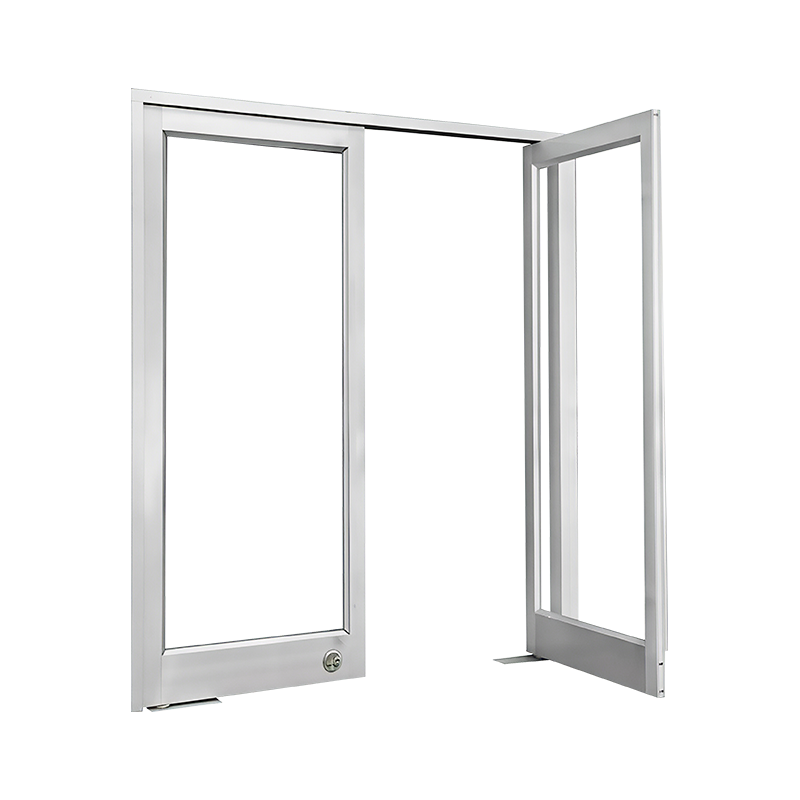
Commercial properties demand security systems that deter intrusion while maintaining smooth operational flow. Aluminum alloy doors from Yicheng incorporate multi-locking point hardware systems that secure the door at multiple positions along the frame, eliminating the vulnerability of single-point locks.
The anti-pry and anti-saw structural reinforcements provide resistance against forced entry attempts using common tools. Independent testing confirms impact resistance reaching national standard level 9, withstanding pressures exceeding 5000Pa. This certification proves particularly valuable for commercial aluminum doors installed in hurricane-prone regions or high-security facilities where failure is not an option.
Hardware options include biometric access integration, electromagnetic locks, and panic exit devices that satisfy life safety requirements without compromising security. Every component is selected for corrosion resistance and cycle durability, ensuring reliable operation through millions of openings.
Modern commercial spaces often face noise challenges from traffic, aircraft, and urban activity. Aluminum alloy doors address this concern through comprehensive acoustic engineering. EPDM sealing strips provide resilient, long-lasting weather seals that maintain their elasticity across temperature extremes from -40°C to 120°C.
The three-way sealing structure creates multiple barriers against sound transmission, achieving sound insulation performance of 42dB. To contextualize this achievement, a 42dB reduction transforms typical outdoor urban noise levels of 75-85dB into interior levels comparable to a quiet library. For office buildings, hotels, and healthcare facilities, this acoustic control directly impacts occupant comfort and productivity.
The plasticity of aluminum enables fabrication into virtually any configuration without sacrificing structural performance. Commercial aluminum doors support multiple operation modes that adapt to spatial constraints and functional requirements:
Even compact apartments and narrow commercial storefronts can achieve impressive visual connectivity and natural lighting through thoughtful aluminum alloy door specification. The slim sightlines possible with high-strength 6063-T6 profiles maximize glass area while maintaining frame integrity.
Environmental responsibility increasingly drives material selection in commercial construction. Aluminum alloy doors contribute to green building certifications through multiple pathways. Aluminum is infinitely recyclable without quality degradation, and the 6063 alloy used in these doors typically contains 50-80% recycled content.
The energy savings generated by superior thermal performance compound over the building's operational life, reducing carbon emissions associated with heating and cooling. Combined with minimal maintenance requirements and exceptional durability, commercial aluminum doors deliver total cost of ownership that frequently undercuts alternatives with lower initial price points.
The versatility of aluminum alloy doors extends across project types and scales. Retail environments benefit from the material's ability to support large display windows while providing secure after-hours protection. Office buildings leverage the acoustic and thermal performance to create productive work environments. Healthcare facilities appreciate the hygienic, easy-to-clean surfaces and durability under constant use.
Educational institutions, hospitality venues, and transportation hubs all find tailored solutions within the commercial aluminum doors product range. Custom finishes, including anodized, powder-coated, and wood-grain sublimation options, ensure aesthetic compatibility with any architectural vision while preserving all performance benefits.


