

 English
 中文简体
中文简体Aluminum Windows: The Ultimate Guide to Alloy and Hurricane-Resistant Options
Introduction Aluminum windows have become one of the most popular choices in modern construction, offering a balance of strength, style, and practical...
Read MoreContent
Most buyers approach window selection with a single priority in mind — either noise reduction or physical security. That's understandable. But in practice, the two demands are inseparable. A window that seals out sound must also seal out intrusion. The same airtight assembly that blocks traffic noise also resists forced entry. And a frame strong enough to support heavy laminated glass is inherently harder to breach.
This convergence is why aluminum alloy window solutions for residential and commercial projects have become the system of choice for architects and developers working in urban environments, mixed-use buildings, and any site where both noise exposure and security risk are real concerns. Aluminum's high strength-to-weight ratio allows slimmer profiles without compromising load capacity — a structural advantage that directly benefits both performance pillars.
The challenge is that not all aluminum window systems are engineered to deliver both. Understanding which technical elements drive security and acoustic performance — and how they interact — is the starting point for making the right specification decision.
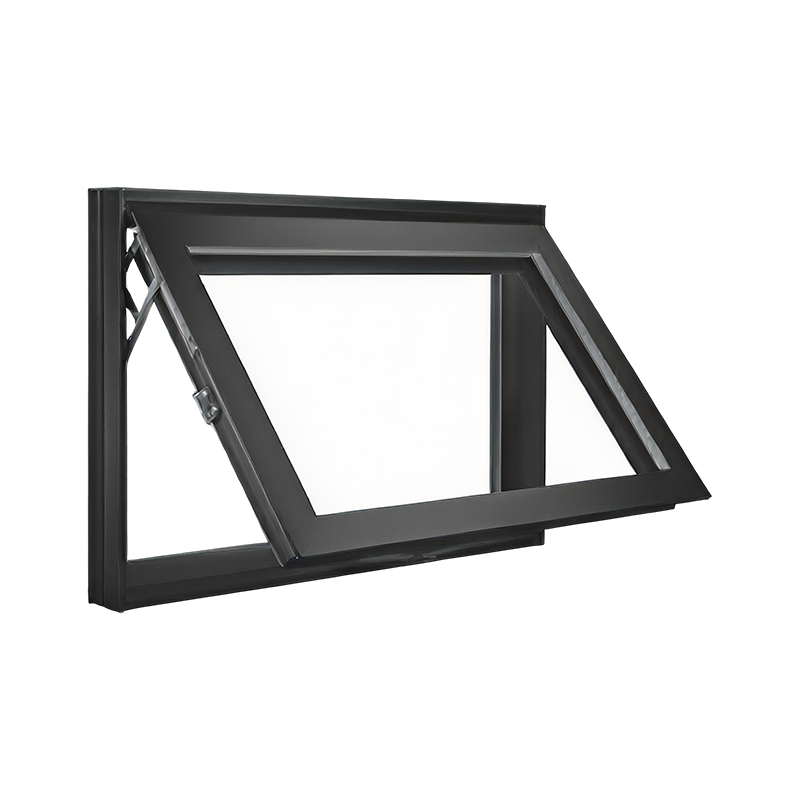
Strip away the glass and hardware, and the frame is what determines a window system's baseline capability. For high-security soundproof applications, the thermal break aluminum profile is the non-negotiable starting point.
A thermal break frame inserts a low-conductivity polyamide strip between the interior and exterior aluminum shells. This interruption does two things simultaneously: it prevents heat transfer across the frame (critical for energy efficiency), and it creates a structural discontinuity that disrupts vibration transmission. Sound travels as mechanical vibration — any break in the continuous aluminum path reduces how much of that vibration crosses from outside to inside.
Profile wall thickness matters just as much. Profiles of ≥1.8mm wall thickness with multi-chamber cross-sections are the industry benchmark for high-performance applications. The air-filled chambers act as additional acoustic barriers, and the increased material mass raises the force required to deform or breach the frame under impact. For commercial or high-traffic installations, profiles in the 2.0–2.5mm range are increasingly specified.
The width of the frame profile also determines how thick a glass unit it can accept. A narrow profile limits glass options; a wider thermal break frame opens the door to triple-glazed or heavy laminated units — where the real acoustic gains are made. This is the structural link that connects thermally broken aluminum door systems and window systems as a coherent architectural package.
The frame sets the ceiling. The glass is where acoustic performance is actually delivered. Sound Transmission Class (STC) is the standard rating used to measure how effectively a window system blocks airborne noise — the higher the number, the more sound is blocked. Here is how different glass configurations perform in practice:
| Glass Configuration | Typical STC Rating | Noise Reduction (dB) | Best Suited For |
|---|---|---|---|
| Single pane (6mm) | STC 26–28 | ~20–25 dB | Low-noise environments only |
| Standard double glazing | STC 30–35 | ~30–35 dB | Suburban residential |
| Thermal break + double glazing | STC 35–40 | ~35–40 dB | Urban residential, offices |
| Laminated acoustic glass (double) | STC 38–44 | ~38–44 dB | High-traffic roads, schools |
| Triple glazing + laminated interlayer | STC 45–52 | ~45–50 dB | Airports, rail corridors, hotels |
The laminated interlayer deserves particular attention. Standard double-glazing traps air between panes to impede sound — effective, but limited in the low-frequency range. Laminated acoustic glass bonds a sound-dampening polymer film (typically PVB or SGP) between glass layers. This film absorbs vibration rather than just reflecting it, which makes a measurable difference for lower-frequency noise like traffic rumble and mechanical equipment.
For security purposes, laminated glass is equally significant. A standard double-pane unit shatters on impact. Laminated glass holds together, maintaining a barrier even after the glass breaks — a property that directly satisfies EN 356 burglar resistance classifications and equivalent international security glazing standards.
Asymmetric glazing — using panes of different thickness within the same unit (e.g., 6mm + 10mm rather than two identical panes) — is a further refinement. Each thickness resonates at a different frequency, eliminating the coincidence effect where matched panes amplify a specific sound frequency rather than blocking it.
A window's STC rating is measured in laboratory conditions with perfect seals. In real-world installation, the seal is where performance is lost. Even a hairline gap around a frame perimeter can drop effective acoustic performance by 10–15 dB — the difference between a quiet room and one where conversations are still audible from outside.
High-security soundproof aluminum systems address this through multiple independent sealing layers. Three- and four-layer seal configurations are standard in premium systems: the outermost layer deflects weather and water, the middle layer provides the primary acoustic barrier, and the innermost layer creates the final airtight closure. Each layer must maintain its elasticity across temperature cycles and years of operation.
EPDM (Ethylene Propylene Diene Monomer) gaskets are the material of choice for high-performance sealing. Compared to standard PVC strips — which begin to harden and shrink within two to three years — EPDM maintains its elastic properties for over ten years under normal conditions. It resists UV degradation, temperature extremes from -50°C to +150°C, and compression set, meaning the gasket returns to its original form after the window is closed repeatedly.
The relationship between sealing and security is direct: the same compressed gasket that prevents sound leakage also eliminates the gaps that make a window vulnerable to crowbar leverage. A properly sealed system increases the force required to pry open a sash, contributing to overall resistance against forced entry alongside the hardware system.
Single-point locks — the kind found on most basic aluminum windows — concentrate all closing force at one location. The frame flexes at every other point. Multi-point locking systems distribute clamping force along the full perimeter of the sash, typically engaging at four to seven points simultaneously when the handle is turned. This does two things: it pulls the sash uniformly against the seal (maximizing acoustic closure) and it creates multiple simultaneous resistance points against forced entry.
The hardware specification matters beyond the locking mechanism itself. Consider:
The hardware system and the glass specification must be matched. Specifying high-security laminated glass with a basic single-point lock produces a system where the glass holds but the frame is easily defeated. Both elements must be rated to the same performance tier for the system to function as specified.
The appropriate specification depends on the noise environment, security threat level, and building type. Use the following framework as a starting point:
| Project Type | Noise Environment | Recommended Glass | Target STC | Security Priority |
|---|---|---|---|---|
| Urban residential (apartments) | 55–70 dB street noise | Laminated double glazing | STC 38–44 | Multi-point lock, EPDM seal |
| Commercial offices (city center) | 60–75 dB | Acoustic laminated IG unit | STC 40–46 | Multi-point lock, security glazing class |
| Hotels / serviced apartments | 65–80 dB (road/rail) | Triple glazing + laminated | STC 45–50 | Full perimeter seal, anti-lift hardware |
| Airport / rail-adjacent buildings | 75–90 dB | Triple glazing + PVB interlayer | STC 48–52+ | Maximum security glazing, concealed hinge |
| High-security facilities | Variable | Laminated security glass (SGP) | STC 42–50 | Anti-blast, multi-point, certified hardware |
Two additional factors deserve attention before finalizing a specification. First, the installation quality. A laboratory-rated STC 45 system installed with poor perimeter sealing or bridging fixings can perform at STC 33 in the field. The window system specification and the installation methodology must be treated as a single deliverable. Second, profile-to-glass compatibility. Not every aluminum profile is engineered to accept the glazing depths required for triple-glazed or heavy laminated units. Confirm the glazing rebate depth, structural reinforcement options, and certified load ratings before combining components across different systems.
For projects requiring custom dimensions, facade integration, or curtain wall coordination, a systems approach across the full building envelope yields the most consistent performance. Explore custom curtain wall and facade systems that can be engineered alongside window units for unified acoustic and security performance across the entire elevation.


