

 English
 中文简体
中文简体Aluminum Windows: The Ultimate Guide to Alloy and Hurricane-Resistant Options
Introduction Aluminum windows have become one of the most popular choices in modern construction, offering a balance of strength, style, and practical...
Read MoreContent
Thermal break casement windows and standard aluminum casement windows differ primarily in frame construction. Thermal break systems incorporate a non-metallic barrier, usually made of polyamide or similar insulating material, between the inner and outer aluminum profiles. This separation limits direct heat transfer through the frame.
Standard aluminum casement windows use a single continuous aluminum profile. While this structure provides strength and durability, aluminum’s high thermal conductivity allows heat or cold to pass through the frame more easily, affecting indoor temperature stability.
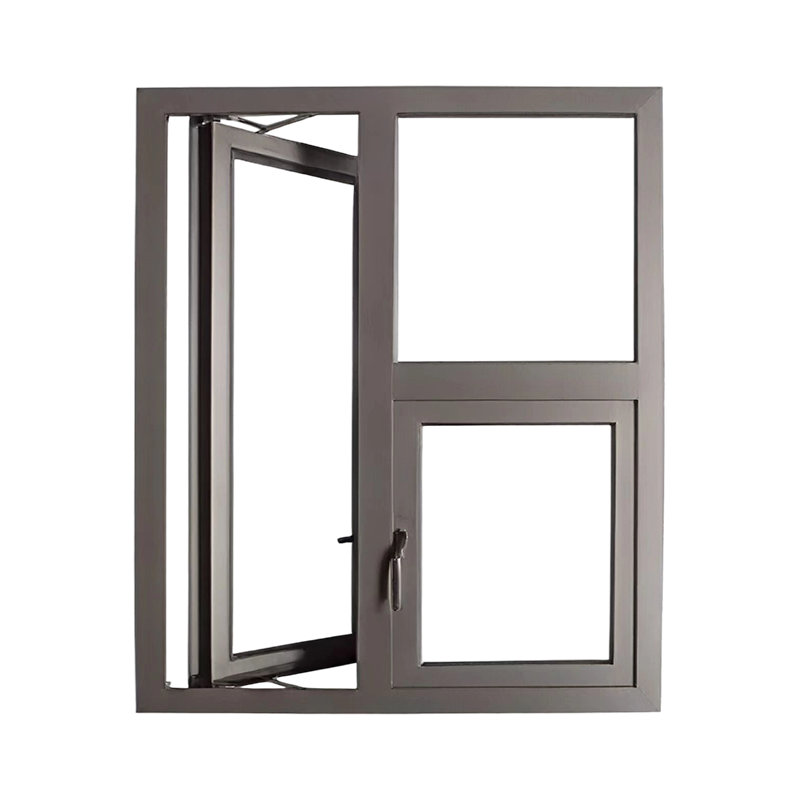
Thermal performance is one of the most significant differences between the two window types. Thermal break casement windows reduce heat transfer through the frame, helping maintain more consistent indoor temperatures. This contributes to lower heating and cooling demand in both residential and commercial buildings.
Standard aluminum casement windows offer limited insulation through the frame itself. In environments with noticeable temperature differences between indoor and outdoor spaces, this can lead to thermal bridging, surface condensation, and reduced overall energy efficiency.
Condensation often forms when warm indoor air contacts cold window frames. Thermal break casement windows help reduce this effect by keeping interior frame surfaces closer to room temperature. This can improve indoor comfort and reduce moisture-related issues near window areas.
Standard aluminum frames are more prone to condensation in cooler climates or air-conditioned interiors. This may lead to water accumulation on frames or sills, requiring additional maintenance or moisture management measures.
Thermal break casement windows often provide improved acoustic performance due to their multi-component frame structure and tighter sealing systems. The insulating barrier and enhanced gasket design help limit sound transmission from external environments.
Standard aluminum casement windows can still offer acceptable sound insulation when paired with suitable glazing, but the frame itself provides less resistance to vibration and sound transfer compared to thermal break systems.
Both thermal break and standard aluminum casement windows are valued for structural strength and corrosion resistance. Aluminum profiles provide long service life and resistance to deformation under wind load when properly designed.
Thermal break frames are engineered to maintain structural integrity despite the inclusion of insulating materials. Proper manufacturing ensures that the bonded profiles remain stable under temperature changes and mechanical stress.
Thermal break casement windows are commonly selected for buildings where energy efficiency and indoor comfort are priorities. They are suitable for residential housing, commercial offices, and projects in regions with significant seasonal temperature variation.
Standard aluminum casement windows are often used in mild climates, industrial buildings, or applications where thermal performance requirements are less demanding. Their simpler structure and cost efficiency make them practical for certain project conditions.
| Feature | Thermal Break Casement Windows | Standard Aluminum Casement Windows |
| Frame Construction | Aluminum profiles with insulating barrier | Single aluminum profile |
| Thermal Insulation | Reduced heat transfer | Higher heat conductivity |
| Condensation Risk | Lower on interior surfaces | Higher in cooler conditions |
| Typical Applications | Energy-efficient buildings | Mild climate or industrial use |
Choosing between thermal break casement windows and standard aluminum casement windows depends on project requirements, climate conditions, and performance expectations. Evaluating energy efficiency goals, indoor comfort needs, and long-term operating considerations can help determine the most suitable option.
Understanding these practical differences allows builders, designers, and property owners to make informed decisions when selecting casement window systems.


