

 English
 中文简体
中文简体Aluminum Windows: The Ultimate Guide to Alloy and Hurricane-Resistant Options
Introduction Aluminum windows have become one of the most popular choices in modern construction, offering a balance of strength, style, and practical...
Read MoreContent
Aluminum alloy windows are functional building components made of high-strength aluminum alloy profiles as the main frame, combined with glass, hardware, sealing systems, and other components to form a complete, high-performance window assembly. Unlike traditional wooden windows that absorb moisture, warp, and require periodic repainting, or steel windows that are heavy and prone to corrosion without intensive surface treatment, aluminum alloy windows deliver a fundamentally superior combination of structural performance, aesthetic flexibility, and long-term durability that has made them the dominant window system in modern construction worldwide. Their four core advantages — lightweight, high strength, corrosion resistance, and strong plasticity — directly address the practical limitations of every competing window frame material and explain why aluminum has become the material of choice for architects, developers, and homeowners seeking windows that perform reliably across decades of service.
The aluminum alloy profiles that form the structural backbone of these window systems are produced through aluminum extrusion — a manufacturing process in which heated aluminum alloy billets are forced through precision-machined steel dies to produce continuous profiles of complex cross-sectional geometry. This process is central to understanding why aluminum alloy windows can be engineered to deliver such a wide range of performance characteristics while remaining cost-competitive with alternative window systems. The extruded profiles are then cut, machined, assembled with glazing, hardware, and weathersealing components, and finished with surface treatments that protect and beautify the completed window unit.
Aluminum extrusion is the foundational manufacturing process that gives aluminum alloy windows their characteristic combination of structural efficiency and design versatility. The process begins with an aluminum alloy billet — typically an alloy from the 6000 series such as 6063 or 6061, selected for their excellent extrudability, good mechanical properties, and outstanding surface finish after anodizing or powder coating. The billet is heated to approximately 450–500°C to reach a semi-plastic state, then pressed by a hydraulic ram through a hardened steel die with an opening shaped to the precise cross-section of the desired window profile.
The geometry that aluminum extrusion can produce is extraordinarily complex compared to what is achievable through rolling, casting, or fabrication from flat sheet. A single window frame profile can incorporate multiple hollow chambers for structural rigidity and thermal insulation, integrated screw ports for hardware attachment, precise grooves for glazing gaskets and weatherstripping, drainage channels to manage water infiltration, and decorative surface details — all produced simultaneously in a single extrusion pass without any secondary machining. This ability to embed functional geometry directly into the profile cross-section is a key reason why aluminum alloy windows consistently outperform windows made from materials that require additional components to achieve equivalent functionality.
Modern aluminum alloy window profiles are designed as multi-chamber extrusions — cross-sections divided into multiple enclosed hollow spaces by internal webs. This configuration delivers several simultaneous performance benefits. Structurally, the hollow chambers behave as miniature box beams, giving the profile high bending stiffness relative to its weight. Thermally, the air trapped within each chamber acts as an insulating layer that reduces heat conduction through the frame — a critical contribution to the overall thermal performance of the window system. Acoustically, the internal web structure adds mass and damping that attenuates sound transmission through the frame section, complementing the sound isolation provided by the glazing unit.
The superiority of aluminum alloy windows over wooden and steel alternatives can be understood clearly by examining each of the four core material advantages in the context of real building performance requirements.
| Advantage | Aluminum Alloy | Timber | Steel |
| Weight | Lightweight (2.7 g/cm³) | Moderate | Heavy (7.8 g/cm³) |
| Strength | High strength-to-weight ratio | Variable, grain-dependent | Very high but heavy |
| Corrosion Resistance | Excellent (self-passivating) | Poor (rot, fungal attack) | Poor (rust without coating) |
| Plasticity / Formability | Excellent via extrusion | Limited by grain structure | Moderate, costly to form |
| Maintenance | Minimal | High (painting, sealing) | High (anti-rust treatment) |
One of the most significant engineering innovations in aluminum alloy window design is the thermal break — a continuous strip of low-conductivity polyamide (PA66) material that is inserted between the interior and exterior aluminum extrusion sections of the window frame profile, physically interrupting the conductive metal path between the warm interior and cold exterior of the building envelope. Without a thermal break, the high thermal conductivity of aluminum (approximately 160 W/m·K) would allow heat to flow rapidly through the window frame, creating cold interior frame surfaces that cause condensation, increase heating energy consumption, and reduce occupant comfort near the window.
Thermally broken aluminum alloy windows achieve overall frame U-values — a measure of heat transmission resistance — of 1.3 to 2.0 W/m²·K depending on the thermal break width and multi-chamber profile geometry, compared to 5.0 to 7.0 W/m²·K for non-thermally-broken aluminum frames. When combined with double or triple glazing units using low-emissivity coated glass and argon-filled cavities, thermally broken aluminum alloy windows deliver complete window system U-values that meet or exceed the most stringent passive house and near-zero energy building standards currently in force in European, North American, and increasingly Asian building regulations. This transforms aluminum alloy windows from merely structural building components into active contributors to the building's energy performance — providing ultra-energy-saving all-around window solutions for residential, commercial, and public spaces.
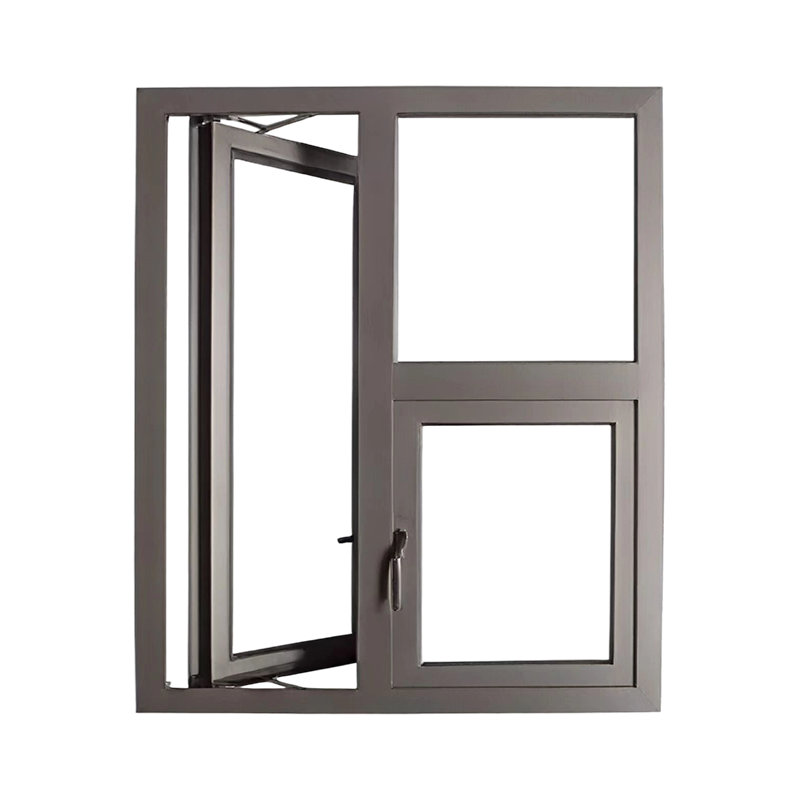
Aluminum alloy windows support multiple modes of opening, sliding, and tilting to achieve the best lighting and viewing effects for every architectural situation. The strong plasticity of aluminum extrusion profiles allows hardware manufacturers and window system designers to engineer precise, durable operating mechanisms that function smoothly over tens of thousands of open-close cycles without degradation in sealing performance or operating force.
The strong plasticity of aluminum extrusion extends beyond shaping to encompass an exceptionally wide range of surface finishing options that allow aluminum alloy windows to be specified in virtually any color, texture, or metallic effect required by an architectural design. Surface finishing also provides the corrosion protection layer that supplements aluminum's natural self-passivating oxide film, ensuring the window's aesthetic appearance is maintained throughout its service life in even the most challenging environmental conditions.
Aluminum alloy windows provide high-security, strong sound insulation, and ultra-energy-saving all-around window solutions that meet the comprehensive performance requirements of contemporary building regulations across residential, commercial, and public space applications. Security performance is achieved through multi-point locking hardware that engages mushroom-head or roller cam locking points along the full perimeter of the sash, combined with reinforced hinge systems and laminated safety glass specifications that resist forced entry attempts far more effectively than single-point locking windows with standard float glass.
Sound insulation performance in aluminum alloy windows is quantified by the Rw weighted sound reduction index, with standard double-glazed aluminum windows achieving Rw values of 30–35 dB and specialist acoustic configurations with laminated glass and wide cavity double glazing reaching 40–45 dB — sufficient to reduce external traffic, aircraft, and urban noise to comfortable interior levels in most building locations. The combination of tight aluminum extrusion profile tolerances, high-quality perimeter weathersealing, and multi-point hardware compression ensures that the acoustic performance measured in laboratory testing is reliably replicated in installed building conditions, providing occupants with the quiet, comfortable interior environment that modern high-quality living and working spaces demand.


