English
 中文简体
中文简体Aluminum Windows: The Ultimate Guide to Alloy and Hurricane-Resistant Options
Introduction Aluminum windows have become one of the most popular choices in modern construction, offering a balance of strength, style, and practical...
Read MoreContent
Aluminum alloy windows have become the dominant window system choice across residential, commercial, and public building projects for a straightforward reason: they deliver a combination of structural performance, design flexibility, and long-term durability that no other window frame material currently matches at a comparable cost point. Built around high-strength aluminum alloy profiles as the main frame — typically 6063-T6 aviation-grade aluminum, which combines excellent extrudability with a tensile strength of approximately 205 MPa after artificial aging — these windows integrate glass, hardware, and sealing systems into a cohesive assembly engineered to perform reliably across decades of service.
Compared with traditional wooden windows and steel windows, aluminum alloy windows offer four core advantages that explain their market dominance. Their lightweight nature — aluminum's density is roughly one-third that of steel — reduces structural load on building facades and simplifies installation logistics without compromising frame rigidity. High strength ensures that large-format window openings can be spanned without the intermediate mullions that break sightlines and reduce glazing area. Corrosion resistance, achieved through anodizing or powder coating surface treatments, eliminates the repainting and rot remediation cycles that drive the lifetime ownership cost of timber windows upward. And strong plasticity in the extrusion process allows aluminum profiles to be formed into virtually any cross-sectional geometry, enabling architects to specify slim sightlines, integrated drainage channels, and complex thermal break configurations within the same profile family.
Hurricane-resistant windows represent the highest performance tier within the aluminum alloy window category, engineered specifically to withstand the combined pressure cycling, windborne debris impact, and sustained wind loads that hurricane and severe storm events impose on building envelopes. The distinction between a standard aluminum alloy window and a hurricane-resistant window is not primarily about the frame material — both use aluminum alloy profiles — but about the system-level engineering of the entire assembly: frame wall thickness, glazing specification, hardware strength, and the anchorage system connecting the window to the building structure.
Hurricane-resistant windows must pass two distinct but related test protocols. The large missile impact test — typically a 9 kg 2×4 timber piece projected at 15 m/s — simulates the windborne debris generated when structural elements of buildings upwind are destroyed in a hurricane and become projectiles. Following impact, the window must then withstand a cyclic wind pressure test that simulates the oscillating positive and negative pressures a building experiences as the storm passes, without the glazing unit breaching or the frame deforming to the point of sash separation. Our aluminum alloy window systems achieve impact resistance reaching national standard level 9, corresponding to a design wind pressure of ≥5000 Pa — a performance level that covers wind speeds exceeding 180 km/h and qualifies these windows for use in the highest wind load zones defined by building codes in hurricane-prone coastal regions.
The glazing unit in a hurricane-resistant window is not standard float glass or even standard double-glazing. Laminated explosion-proof glass — a sandwich construction of two or more glass plies bonded by a PVB (polyvinyl butyral) or SGP (SentryGlas Plus) interlayer — is the standard specification for impact-rated windows. When struck by a projectile, the glass plies crack but the fragments remain adhered to the interlayer, preventing the glazing from breaching and maintaining the pressure envelope of the building even after impact. SGP interlayer formulations offer significantly higher post-breakage stiffness than PVB, making them the preferred choice for large-format hurricane-resistant window panels where maintaining structural continuity of the glazed area after a strike is critical to resisting subsequent wind pressure cycles.
Energy saving and environmental protection performance in aluminum alloy windows is determined by the combined thermal resistance of the frame assembly and the glazing unit. Aluminum is an excellent structural material but a poor thermal insulator — its thermal conductivity of approximately 160 W/(m·K) means that an unbroken aluminum frame profile creates a direct conductive heat transfer path between interior and exterior environments. Eliminating this thermal bridge is the fundamental engineering challenge of high-performance aluminum window design, and the solution is the thermal break: a low-conductivity polyamide (nylon PA66) strip mechanically locked between the interior and exterior aluminum profile sections, interrupting the conductive path.
Our aluminum alloy window systems use 24mm nylon PA66 insulation strips — a wider thermal break than the 14–18mm strips common in entry-level thermally broken aluminum profiles — which, combined with the 6063-T6 aviation-grade aluminum frame geometry, achieves a whole-window heat transfer coefficient (U-value) as low as 1.6 W/(m²·K). This represents an energy saving improvement of approximately 40% compared to conventionally constructed aluminum windows without thermal breaks, and approaches the performance levels previously associated only with PVC or timber window frames. For building projects pursuing energy efficiency certifications or seeking to reduce HVAC operating costs, this thermal performance level delivers measurable reductions in heating and cooling loads that justify the modest premium over standard aluminum window specifications.
The double-layer insulating glass units installed in these window systems further enhance overall thermal and solar performance. The standard configuration — two glass lites separated by a 16mm argon-filled cavity — provides a center-of-glass U-value of approximately 1.1 W/(m²·K). Optional Low-E coating applied to the inner surface of the outer glass lite selectively reflects long-wave infrared radiation back to the exterior while maintaining high visible light transmittance, reducing solar heat gain coefficients to 0.25–0.35 in solar control configurations. This combination effectively blocks ultraviolet rays and heat transfer, protecting interior furnishings from UV degradation while substantially reducing air conditioning loads in high solar radiation climates.
Security protection in aluminum alloy windows operates at two distinct levels: resistance to forced entry through the window opening, and passive fire protection to delay the spread of fire through glazed facade elements. Both requirements are addressed through specific hardware and glazing specifications that must be integrated into the window system design from the outset rather than added as afterthoughts.
The multi-locking point hardware system used in our aluminum alloy windows distributes locking engagement across the full perimeter of the sash rather than concentrating it at a single latch point. A casement window equipped with a multipoint lock engages shoot bolts at the top, bottom, and side of the sash simultaneously when the handle is turned, making it impossible to lever the sash open from outside by applying force to a single point. The anti-pry and anti-saw structure of the frame and sash profiles incorporates reinforcement inserts and interlocking rebates that resist the crowbar attacks and cutting tools used in forced entry attempts. Together, these measures provide security performance that exceeds the requirements of residential burglary resistance standards and satisfies commercial building security specifications for ground-floor and low-level window installations.
Fire-rated aluminum alloy windows achieve a fire resistance limit of 1.5 hours, certified through full-assembly furnace testing to international fire resistance standards. This rating reflects the window's ability to maintain integrity — preventing the passage of flames and hot gases — and insulation — limiting the temperature rise on the unexposed face — for the specified duration. The aluminum profiles in fire-rated window systems incorporate intumescent seals that expand dramatically when heated, sealing gaps between frame and sash before the aluminum softens, while fire-resistant glazing units use specially formulated glass with embedded fire suppression gel layers that convert to an insulating foam on exposure to heat. Compatibility with fire linkage systems — where the window is connected to the building's fire alarm and suppression network — allows automatic closure of openable sashes on fire alarm activation, ensuring that ventilation pathways through windows do not become fire spread routes during an emergency.
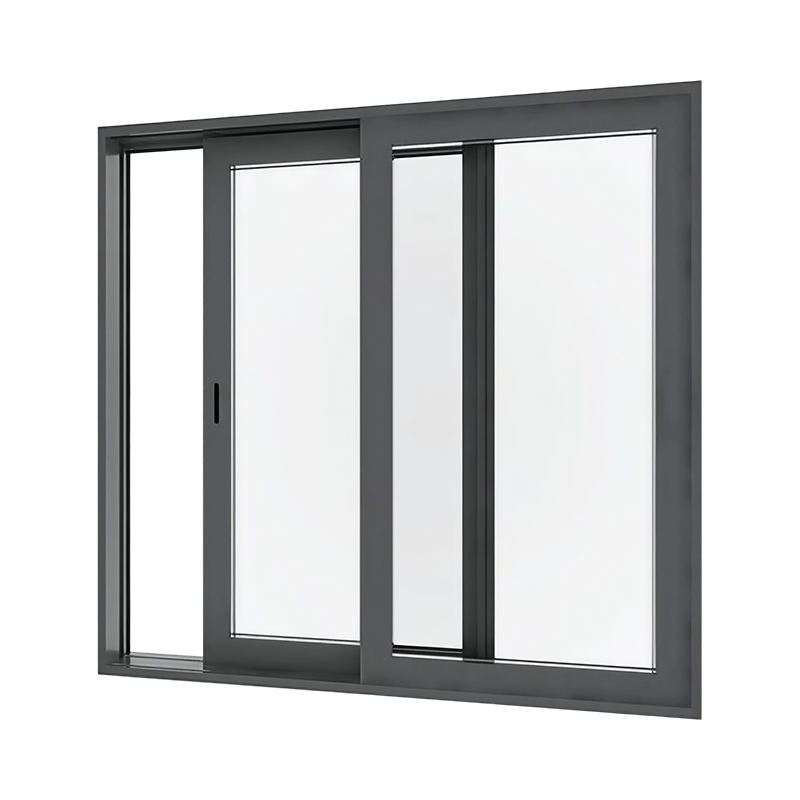
Aluminum alloy windows support multiple modes of opening — including casement, sliding, tilt-and-turn, and fixed light configurations — within the same profile system, allowing architects and builders to select the operational mode best suited to each location's requirements for ventilation, maintenance access, and security without switching between incompatible window systems. Tilt-and-turn windows offer particular versatility: in the tilt position, the sash opens inward at the top to provide secure night ventilation that cannot be exploited for entry; in the turn position, the sash swings fully inward for cleaning and emergency egress. This flexibility supports the best lighting and viewing effects by allowing large unobstructed glazed areas where fixed lights are specified, while providing precisely controlled ventilation through adjacent openable sashes.
Sound insulation performance is a critical selection criterion for aluminum alloy windows in urban residential buildings, schools, hospitals, and commercial offices. The acoustic performance of the window assembly is determined by the mass and damping of the glazing unit, the airtightness of the perimeter seals, and the absence of flanking transmission paths through the frame. The following table summarizes the typical sound reduction index (Rw) achievable with different glazing configurations in our aluminum alloy window systems:
| Glazing Configuration | Sound Reduction Index (Rw) | Recommended Application |
|---|---|---|
| 6mm + 12A + 6mm standard IGU | 32–34 dB | Suburban residential, low-traffic areas |
| 6mm + 16A + 6.38mm laminated IGU | 38–40 dB | Urban residential, offices near roads |
| 8mm + 16A + 8.76mm laminated IGU | 42–45 dB | High-traffic urban, schools, hospitals |
| Triple glazing with asymmetric lites | 48–52 dB | Airport proximity, recording studios |
The versatility of aluminum alloy windows across residential, commercial, and public space applications ultimately reflects the adaptability of the underlying aluminum profile and hardware platform. Whether the requirement is hurricane resistance on a coastal condominium, fire safety compliance in a high-rise office tower, acoustic performance in a school adjacent to a highway, or energy efficiency in a low-carbon residential development, the aluminum alloy window system — properly specified with the appropriate glazing, hardware, and thermal break configuration — delivers a high-security, strong sound insulation, and ultra-energy-saving all-around window solution that meets the full scope of modern building performance requirements.