English
 中文简体
中文简体Aluminum Windows: The Ultimate Guide to Alloy and Hurricane-Resistant Options
Introduction Aluminum windows have become one of the most popular choices in modern construction, offering a balance of strength, style, and practical...
Read MoreAcross commercial towers, luxury hotels, and institutional campuses, project teams facing aggressive schedules are increasingly specifying unitized curtain wall systems over traditional stick-built alternatives. The shift is not driven by aesthetics alone. It reflects a fundamental recalculation of where risk, cost, and quality control sit in a construction programme—and unitized systems consistently come out ahead on all three.
This article examines what makes unitized curtain wall systems the preferred façade solution for mid- to high-rise construction, and which project conditions favor them most.
Content
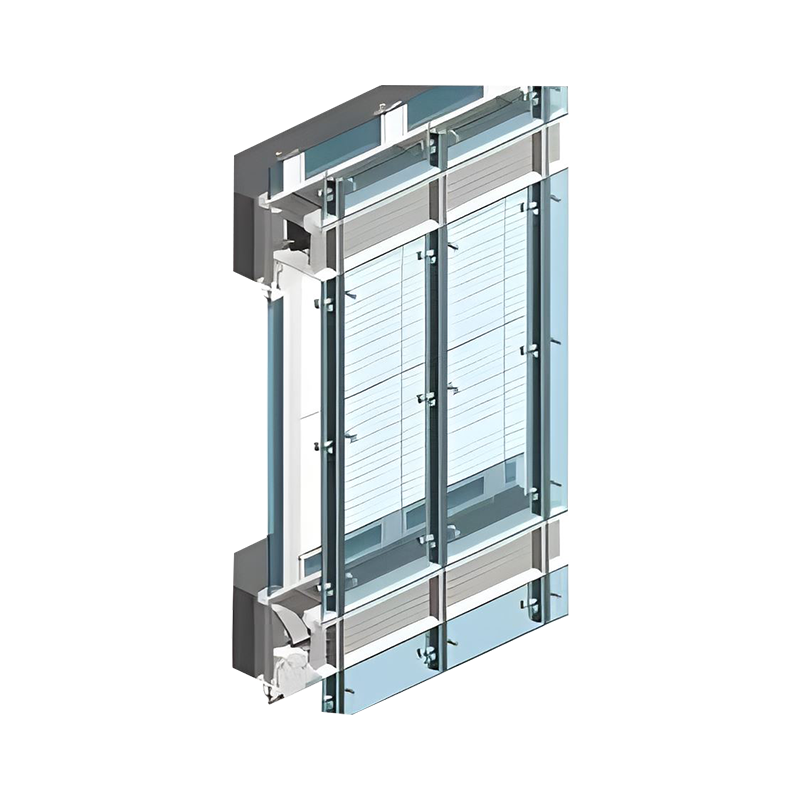
A unitized curtain wall system is a prefabricated façade solution where complete floor-height panels—each containing glass, aluminum frame, gaskets, and thermal insulation—are assembled in a factory under controlled conditions, then transported to site and installed unit by unit. The result is a building envelope that arrives ready to perform, rather than one that is built and tested in the open air.
For high-rise projects, this distinction is significant. On a 40-storey commercial tower, switching from a stick system to a unitized approach can reduce façade installation time by 30 to 50 percent, depending on panel complexity and crane access. Fewer workers are required on the building face at any given time, scaffolding requirements are reduced, and weather delays that routinely affect site-assembled systems become largely irrelevant to the production schedule.
The growing adoption of unitized systems reflects an industry-wide recognition that the façade is not simply a finishing element—it is a high-performance building component, and the environment in which it is built determines how consistently it performs.
The factory environment is where unitized systems earn their quality premium. Panels are assembled on jigs that hold tolerances tighter than any site condition can reliably match. Glass is installed and sealed before the panel ever leaves the production floor. Gaskets, thermal breaks, and drainage channels are fitted and tested as an integrated system, not assembled sequentially by different trades in changing weather.
Quality inspection happens at the source. Each panel can be pressure-tested for air and water tightness before dispatch, rather than after installation—when remediation means working at height with completed interior finishes below. Defects caught in the factory cost a fraction of what they cost to fix on the building face.
Transportation logistics are planned in installation sequence. Panels arrive at site numbered and ordered for crane pick, minimising laydown area and handling damage. This supply-chain discipline is one of the underappreciated advantages of unitized systems: it forces early coordination between the façade contractor, structural engineer, and main contractor that ultimately benefits the whole project.
Seismic performance is rarely the first topic raised in a curtain wall specification meeting, yet it is one of the most consequential. In seismic zones, the building structure moves during a ground event—floors shift laterally relative to each other, and the façade must accommodate that movement without cracking, delaminating, or losing its weathertight seal.
Unitized systems handle this better than stick-built alternatives by design. The interlocking stack joint between adjacent floor units creates a built-in slip plane that allows controlled inter-story drift without transferring stress to the glass or frame. Each unit moves with its floor slab while the joint between units absorbs the differential movement. This is not an add-on feature—it is an inherent characteristic of how unitized panels connect to each other and to the structure.
The seismic-resistant unitized curtain wall engineered for high-rise safety takes this further with connection details specifically designed to accommodate the inter-story displacement values defined in local seismic codes, giving structural engineers the documented performance data they need at the specification stage.
Because unitized panels are assembled as complete systems in the factory, thermal and acoustic performance characteristics are consistent across every unit on the building. There is no variation caused by different site crews, changing adhesive cure conditions, or gasket installation errors that are difficult to detect after the fact.
Thermal break profiles—the insulating barriers that interrupt the conductive aluminum frame—are installed under controlled conditions, ensuring consistent contact and compression. Multi-pane glazing units with low-E coatings arrive pre-fitted, eliminating the risk of field damage to glass edge seals that would compromise insulating gas retention over time.
Acoustic performance follows the same logic. The continuous perimeter seal of each unitized panel, when correctly installed, eliminates the flanking paths that are a common source of acoustic failure in stick systems assembled with multiple sealant beads by hand. For buildings near transport corridors or in dense urban environments, this consistency is measurable in the finished space. The energy-efficient double-skinned curtain wall for enhanced thermal insulation extends this further by creating a ventilated cavity between two glass skins, significantly reducing solar heat gain and improving year-round energy performance.
Both systems have legitimate applications. The choice depends on project scale, programme, budget structure, and site constraints—not on a universal preference for one approach over the other.
| Factor | Unitized System | Stick System |
|---|---|---|
| Installation speed | Fast — parallel factory and site work | Slower — all assembly on site |
| Quality consistency | High — factory-controlled environment | Variable — site conditions dependent |
| Design flexibility | Moderate — changes require panel re-engineering | High — adjustments easier during installation |
| Upfront cost | Higher initial cost | Lower initial cost |
| Seismic performance | Inherently accommodates inter-story drift | Requires additional detailing |
| Best fit | High-rise, fast-track, repetitive floor plates | Complex geometry, low-rise, tight budgets |
For projects where the façade design is largely repetitive and the programme is fixed, unitized systems almost always deliver better overall value despite higher upfront costs—the labour savings, reduced site risk, and quality consistency offset the price premium well before handover. For highly complex or low-repetition facades, the high-span support stick curtain wall designed for large structural openings offers the flexibility to accommodate irregular bay dimensions and non-standard configurations that would be prohibitively expensive to unitize, while the waterproof breathable point-fixed glass curtain wall serves projects prioritising minimal sightlines and maximum transparency.
Commercial office towers. Repetitive floor plates with identical bay dimensions are the ideal use case for unitized curtain walls. Panels are engineered once and produced at volume, driving down unit costs while maintaining the tight tolerances that commercial tenants and building inspectors expect.
Hotels and serviced residences. Fast-track hotel programmes frequently use unitized systems to compress the envelope programme and allow interior fit-out to begin earlier. The reduced noise and disruption of crane-and-click installation also matters when phased opening is planned with lower floors occupied during upper-floor façade work.
Hospitals and healthcare facilities. Air and water tightness requirements in healthcare environments are stringent. Factory-tested unitized panels offer the documented performance evidence that healthcare clients and infection control consultants require, with less reliance on site workmanship quality.
High-rise residential. In residential towers, acoustic performance between the exterior and interior is a primary occupant concern. The consistent perimeter sealing of unitized systems delivers more predictable sound reduction than stick systems—a measurable quality differentiator that developers can specify with confidence.
Across all these building types, the unitized curtain wall system represents a convergence of speed, performance, and risk management that reflects where commercial construction is heading. For a full overview of available configurations—from unitized and double-skinned to point-fixed and aluminum panel options—the complete curtain wall product range covers the full spectrum of modern façade requirements.